


NORTHWORKS
COPPER COLLECTION
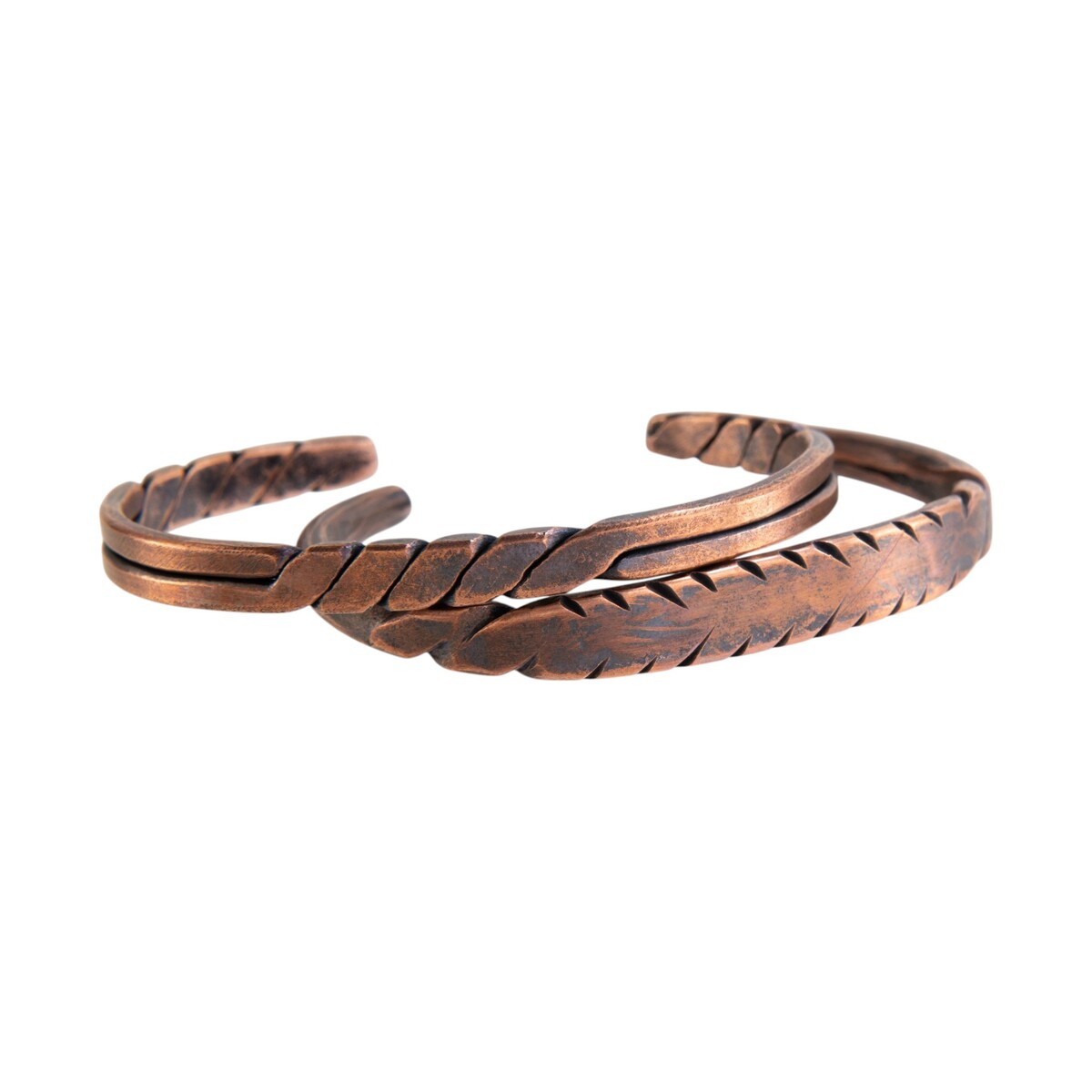
COPPER COLLECTION
For Native American peoples, copper was never merely an inexpensive substitute for silver.
Long before silversmithing became widespread, copper had already played an important role in the daily lives, trade, and adornment traditions of Indigenous peoples across North America.
By the late 1870s, records indicate that Navajo people acquired copper wire in exchange for sheep and shaped it into bracelets.
Its value cannot be measured by the price of the metal alone.
What drew us to copper for this collection was both its history and the way its appearance continues to change through use.
Air and humidity, as well as sweat and natural oils from the skin, gradually affect its color and luster. The environment in which it is worn—including exposure to salt and the acidity or alkalinity of surrounding materials—also contributes to these changes.
A deepening brown, a shine created through friction, and, under certain conditions, the blue-green hues of verdigris.
These changes on the surface are known as patina.
The color of a piece when it is finished is only one point in its journey.
As it becomes part of the wearer’s everyday life, it takes on a new expression.
We believe that this transformation is an essential part of copper’s beauty.
ネイティブアメリカンの人々にとって、銅は決して銀の安価な代用品ではありませんでした。
銀細工が広く普及するよりもずっと以前から、銅は北米各地の先住民の暮らしや交易、装飾文化において重要な役割を果たしてきました。
1870年代後半には、ナバホ族の人々が羊との交換によって銅線を手に入れ、それをブレスレットに加工していたという記録が残されています。
その価値は、金属そのものの価格だけでは測れないものです。
今回のコレクションで私たちが銅に惹かれたのは、そうした歴史的な背景と、使い続けることで表情が変化していくという特性でした。
空気や湿気、肌から出る汗や皮脂によって、銅の色合いや光沢は少しずつ変化していきます。また、塩分への接触や周囲の物質の酸性・アルカリ性など、身につける環境もその変化に影響します。
深みを増していく茶褐色、摩擦によって生まれる光沢、そして条件によって現れる青緑色の緑青。
こうした表面の変化は「パティナ」と呼ばれています。
完成したときの色合いは、その長い変化の過程における、ひとつの姿にすぎません。
身につける人の日常に溶け込むにつれて、新たな表情が生まれていきます。
私たちは、この変化こそが銅の美しさを形づくる、大切な要素だと考えています。
SHARE:


